
Low-slope roofs depend on membrane condition, seams, drainage, flashing, and penetrations working together to keep water moving away from vulnerable areas. For flat roofing in Columbus, property owners need repairs, replacement, or installation; system details matter just as much as the visible surface, which is why Buckeye City Roofing evaluates the complete roof before defining the work.
Leaks, missing shingles, or visible roof damage deserve a closer look before moisture travels farther into the house.
A flat roof is not truly level. Its slope, drains, scuppers, membrane layout, parapet flashing, and penetrations are designed to control where water travels. When one of those elements stops working properly, ponding water or moisture entry can develop even when much of the surface still appears intact.
With more than 25 years of roofing experience, Buckeye City Roofing handles flat roofing Columbus properties may need, including repairs, installation, replacement, and system evaluation. Many of these roofs are part of commercial roofing for local buildings, where drainage and membrane details can directly affect larger occupied spaces below.
Ponding water, slow drainage, or recurring damp areas can point to slope, drain, membrane, or flashing conditions that deserve closer inspection.
Water remaining after rainfall can expose membranes and seams to prolonged moisture and reveal drainage concerns.
Separated or weakened seams can create direct pathways beneath an otherwise intact membrane surface.
Deteriorated flashing or transitions along parapet walls can allow moisture around roof edges.
Foot traffic, debris, tools, or rooftop activity can create small openings that lead to leaks.
Restricted drains or scuppers can slow water movement and increase standing water across low areas.
Raised membrane sections can indicate trapped moisture, adhesion trouble, or movement within the roofing assembly.
• Flat roof inspection and condition evaluation
• Ponding water and positive drainage review
• Membrane seam and surface-damage assessment
• Roof penetration and curb-detail inspection
• Parapet flashing and perimeter-edge work
• Flat roof installation and replacement planning
• Commercial TPO membrane roofing
• EPDM rubber roof solutions
• Modified bitumen roof systems
• Professional roof repair options for localized flat roof failures
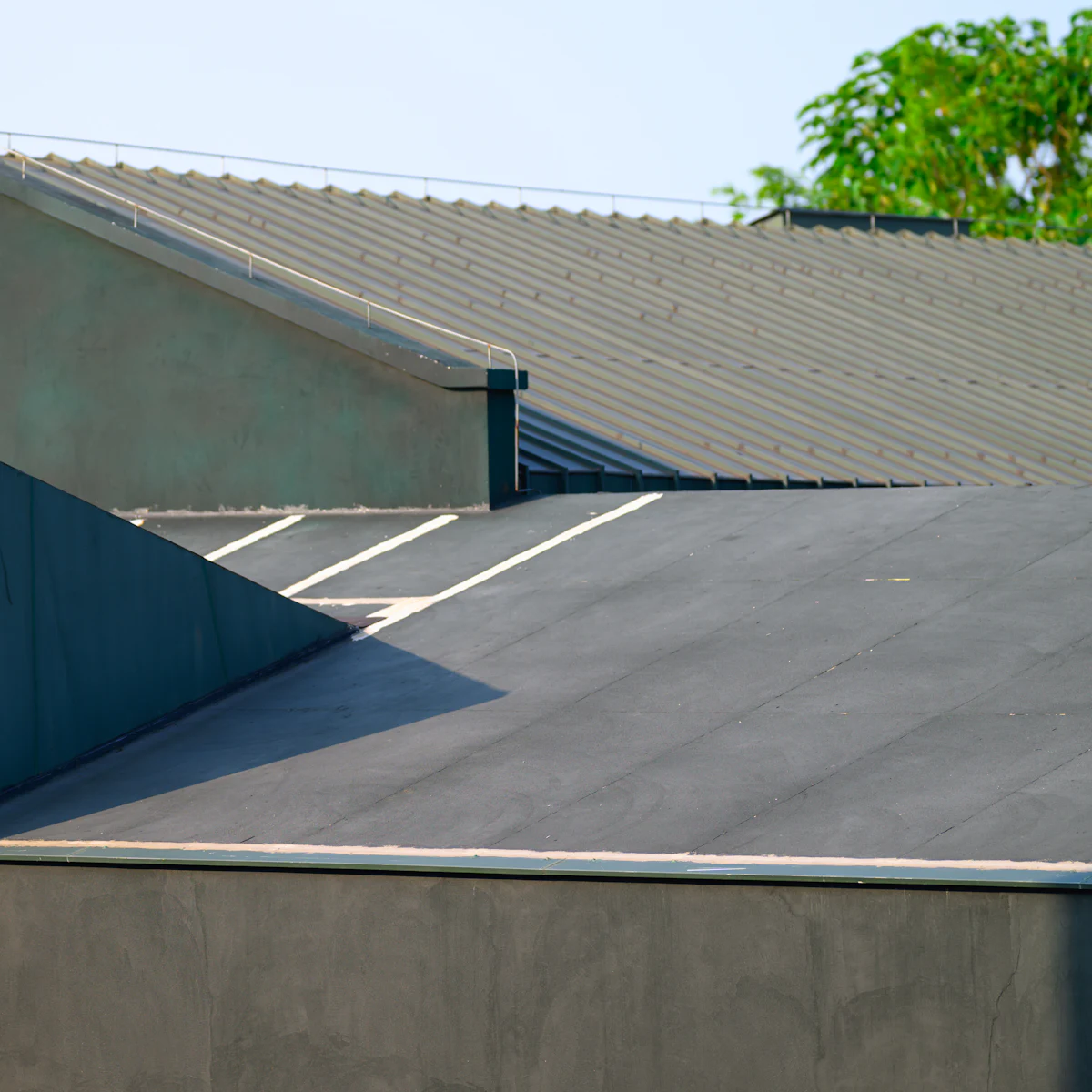

System selection should account for roof slope, drainage design, penetrations, building use, existing materials, and how the surface will be accessed over time.
Flat Roof System | Typical Application | Key Service Considerations |
TPO | Commercial low-slope roofs | Welded seams, punctures, flashing, drains, and membrane condition |
EPDM | Flat and low-slope buildings | Rubber membrane, edges, patches, seams, and penetrations |
Modified Bitumen | Layered low-slope roof assemblies | Surface wear, laps, flashing, splits, and drainage |
Built-Up Roofing | Larger flat roof areas | Surface condition, layered assembly, drainage, and perimeter details |
1. Track the Water
We review drainage paths, ponding areas, seams, penetrations, and visible moisture clues.
2. Check the Membrane
Surface condition and roof details help define the affected area and scope.
3. Address the Failure
Repair or replacement work targets the identified weakness within the existing system.
These answers cover flat roof drainage, membrane choices, ponding water, repairs, replacement, and common low-slope roofing concerns.
Brief water accumulation after rainfall can occur, but water that remains for extended periods can indicate drainage or slope concerns. Repeated ponding may place added stress on seams, flashing, and membrane surfaces, so the cause should be evaluated rather than treating the water itself as the only issue.
TPO is a thermoplastic membrane with welded seams, EPDM is a flexible rubber roofing membrane, and modified bitumen uses reinforced asphalt-based layers. Each system handles seams, repairs, flashing, and installation differently, so the existing roof and building needs should guide material selection.
Yes, when the damage is localized, and the surrounding membrane remains serviceable. A puncture, open seam, flashing failure, or isolated penetration issue may support focused repair. Widespread deterioration, trapped moisture, or repeated leaks across different areas can make replacement planning more appropriate.
Parapet walls create transitions where horizontal roofing meets vertical surfaces. Flashing at those locations helps control moisture around the roof perimeter. If that detail separates, cracks, or deteriorates, water can enter even when the main membrane field remains in otherwise usable condition.
Buckeye City Roofing works with TPO, EPDM, modified bitumen, and other flat or low-slope roofing systems. The appropriate service depends on membrane condition, drainage, roof slope, penetrations, flashing, existing repairs, and whether the project involves maintenance, repair, installation, or replacement.
Tell Buckeye City Roofing what you are seeing on the roof, including leaks, ponding water, membrane damage, drainage trouble, or an aging system that may need replacement.
Flat roofing in Columbus homes and businesses performs best when drainage, seams, flashing, and membrane details work together. Buckeye City Roofing can evaluate the system, identify the weak point, and help determine whether repair, replacement, or another flat roof solution fits the property.